


Commercial Security Gates
A commercial property is only as secure as its most exposed entry point. For warehouses, industrial units, schools, retail compounds, apartment blocks, logistics yards, and private facilities, that point is often the main gate. It controls movement, protects valuable assets, and creates the first physical barrier between the property and unwanted access.
A well-built security gate does more than open and close. It combines strong materials, accurate fabrication, skilled welding, protective finishing, and proper installation into one dependable system. When each stage is handled with care, the gate becomes part of the property’s long-term protection plan.
This project post explains how a professionally fabricated commercial metal security gate is planned, built, finished, and installed for modern property protection.

A commercial gate begins with clear security goals
Every successful gate fabrication project starts with a practical question. What does the property need to protect?
A commercial entrance handles different risks compared with a residential gate. It may need to manage delivery vehicles, staff access, visitor movement, after-hours security, or restricted zones. The design must support daily use without weakening the level of protection.
During the planning stage, the fabrication team studies the site conditions and the expected use of the gate. This includes:
Entry width and available opening space
Vehicle size and turning radius
Ground level, drainage, and slope
Boundary wall strength
Frequency of use during the day
Manual or automated operation
Visibility needs for guards or CCTV
Safety requirements for pedestrians and vehicles
This early assessment helps decide whether the project needs a sliding gate, swing gate, cantilever gate, folding gate, or a customised hybrid design.
For many commercial properties, a sliding steel gate is a strong choice because it saves space and suits wide entrances. Swing gates may work better where side clearance is limited but front clearance is available. The right choice depends on the site, not a fixed template.
Design planning shapes strength and movement
A security gate must look clean, but its real value comes from how it performs. Design planning connects appearance, strength, and daily movement.
The gate frame carries the main load. If the frame is too light, the gate may sag, twist, or drag over time. If it is overbuilt without proper balance, it may place stress on rollers, hinges, motors, or support posts. Professional fabrication aims for the right balance between security and smooth operation.
Key design details include:
Frame depth and section size
The outer frame must resist bending, especially on wide openings. Rectangular hollow sections, square tubes, and heavy steel profiles are often used because they provide good strength for gate structures.
Internal bracing
Internal bars, diagonal supports, or reinforced patterns reduce flexing. This is important for large gates exposed to frequent use, wind pressure, or attempts at forced access.
Clearance and ground levels
A small mistake in clearance can cause dragging, uneven movement, or water-related issues during rain. The design must allow the gate to move freely while keeping the lower gap controlled.
Security spacing
Vertical bars, mesh panels, perforated sheets, or solid sections can be selected based on visibility and protection needs. The spacing must prevent easy climbing or entry while still keeping the gate practical for the site.
Provision for automation
If the gate will use a motor, access control, sensors, or locks, the fabrication design must include the correct mounting points from the start. Adding these later can weaken the finish or require cutting into completed work.
Good design planning prevents problems before the first steel section is cut.
Material selection affects long-term durability
For commercial gate fabrication, material choice is one of the most important decisions. The gate must resist impact, movement stress, corrosion, and daily wear.
Mild steel remains a common choice for heavy-duty gates because it is strong, workable, and suitable for welding. It can be cut, shaped, reinforced, and finished in many ways. For harsh environments or specific design requirements, galvanised steel or stainless steel may be used.
The project team selects materials based on:
Required gate size
Level of security needed
Exposure to weather
Expected traffic volume
Finish type
Maintenance expectations
Budget and lifespan goals
A modern commercial security gate is often built with a heavy steel outer frame, internal steel members, reinforced locking sections, and strong guide or hinge components. If a sliding system is used, the track, rollers, guide brackets, and end stops must match the gate weight.
This is where professional experience matters. A gate can look strong from the outside but fail early if the rollers, hinges, posts, or weld zones are under-specified. The strength of the full system matters more than any single part.
Accurate fabrication turns the design into a working gate
Once the design and materials are approved, fabrication begins with measurement confirmation and material preparation. Steel sections are cut to size, edges are cleaned, and components are checked before assembly.
Precision at this stage affects the entire project.
If the frame is not square, the gate may not close evenly. If internal bars are uneven, the gate will look unprofessional. If support plates are misaligned, locking hardware or automation brackets may not fit correctly. Careful fabrication reduces these risks.
A professional fabrication process usually includes:
Measuring and cutting the steel sections
The steel is cut according to the approved drawings and site measurements. Clean cuts help improve welding quality and final alignment.
Setting the frame on a level work surface
The outer structure is positioned and checked for squareness before welding. This step controls the shape of the entire gate.
Fitting internal members
Bars, sheet panels, mesh sections, braces, and decorative elements are added according to the design. Consistent spacing improves both appearance and strength.
Adding hardware zones
Lock boxes, hinge plates, motor brackets, roller mounts, guide plates, safety stops, and access control provisions are prepared before finishing.
Grinding and surface preparation
Weld areas are cleaned, sharp edges are removed, and surfaces are prepared for the selected finish.
Good fabrication is not rushed. It relies on repeated checking, proper tools, and a clear understanding of how the gate will perform once installed.
Welding quality is central to gate strength
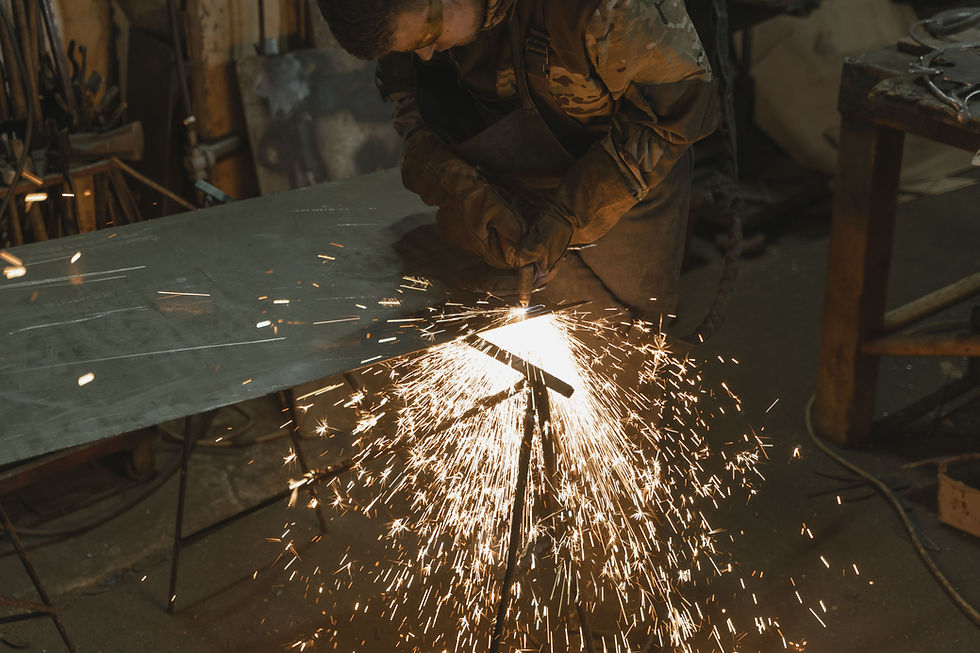
Welding gives the gate its structural integrity. Poor welding can create weak points, rough joints, cracks, or areas where rust can begin. Skilled welding produces joints that are strong, neat, and suitable for finishing.
In a commercial security gate project, welders focus on both strength and consistency. The outer frame joints, internal bracing, hinge plates, roller brackets, and locking sections receive special attention because these points handle the most stress.
Welding work must account for heat movement as well. Steel can distort when exposed to heat, especially on large frames. Experienced fabricators use the right sequence, clamping, spacing, and cooling methods to help keep the gate straight.
A gate that remains aligned after welding is easier to finish, easier to install, and more reliable during use.
Finishing protects the gate from weather and wear
A commercial gate often sits outdoors throughout the year. In Pakistan, that can mean strong sun, dust, rain, humidity in coastal areas, and temperature changes. Without proper finishing, exposed steel can corrode and lose strength over time.
Surface preparation comes before coating. The steel must be cleaned of oil, dust, loose scale, and welding residue. Depending on the project and required finish, the process may include sanding, grinding, chemical cleaning, primer application, galvanising, or powder coating.
Common finishing options include:
Finish type | Best use | Key benefit |
Primer and paint | General commercial gates | Flexible colour choice and straightforward maintenance |
Powder coating | Modern entrance gates | Smooth finish with strong surface protection |
Hot-dip galvanising | Outdoor or high-exposure sites | Strong corrosion resistance |
Galvanised steel with top coat | Long-life commercial use | Added protection with a refined appearance |
The finish also affects the property’s image. A clean black, grey, or custom colour finish can make a security gate look professional without drawing unnecessary attention. The goal is a gate that looks sharp while staying ready for heavy use.
Security features improve control at the entrance
A strong gate is the physical barrier, but modern property protection often needs a full access approach. The gate should support practical security features without becoming difficult to use.
Security considerations may include:
Heavy-duty locking points
Commercial gates need locks that match the weight and purpose of the gate. Reinforced lock boxes can protect the locking mechanism from direct impact or tampering.
Access control readiness
The gate can be prepared for card readers, keypad systems, intercoms, remote controls, or guard-operated controls. Even if automation is planned later, proper mounting provisions help avoid future cutting and welding.
Anti-lift and anti-derail details
Sliding gates should include features that reduce the chance of lifting the gate off its track. Guide rollers, stops, and properly designed track systems play a key role.
Controlled visibility
Some properties require clear visibility through the gate for guards and cameras. Others need privacy panels. The fabrication design can balance both needs.
Safety during movement
Any automated or large gate must account for pedestrians, vehicles, and maintenance access. Clear movement paths, end stops, warning signage, and suitable control systems help reduce operational risk.
A professional gate does not rely on weight alone. It uses thoughtful details to support real security.
Installation connects the gate to the property
Even the strongest fabricated gate can underperform if installation is weak. Site installation must transfer the gate’s weight and movement safely into the supporting structure.
For a swing gate, the hinge posts or wall-mounted plates must handle the gate load without pulling loose. For a sliding gate, the track must be level, straight, and fixed to a suitable foundation. The guide system must keep the gate upright and aligned through repeated operation.
Installation work usually includes:
Marking the final gate position
Preparing foundations or fixing points
Setting posts, tracks, or guide brackets
Placing the gate into position
Checking alignment and movement
Installing locks, stops, and safety hardware
Testing opening and closing several times
Making final adjustments
On a commercial site, installation must also minimise disruption. A good team plans lifting, access, tools, and safety controls before arriving. This keeps work organised and helps return the entrance to service as soon as practical.
Durability comes from the full system
Durability is not created by one thick steel section. It comes from a complete system that works together.
A long-lasting commercial gate needs:
Proper design for the opening size
Correct steel thickness and section choice
Accurate fabrication and alignment
Clean, strong welds
Corrosion-resistant finishing
Reliable hinges, rollers, guides, and locks
Solid installation on a suitable base
Simple maintenance access
When these parts work together, the gate opens smoothly, resists damage, and maintains its shape over time. That means fewer repairs, better security, and a more professional entrance for the property.
Routine maintenance still matters. Tracks should be kept clear, hinges or rollers should be checked, coating damage should be repaired early, and locking systems should be tested. These small steps help protect the investment.
Professional craftsmanship shows in the final result
The final result of a commercial security gate project should feel solid from the first movement. The gate should sit straight, close correctly, and move without dragging or shaking. The finish should look even. Welds should be clean. Hardware should feel secure. The design should match the property rather than look like an afterthought.
For a metal fabrication company, this is where craftsmanship becomes visible.
A well-executed gate improves the entrance in several ways:
It creates a strong first barrier against unauthorised access
It supports controlled movement of vehicles and visitors
It improves the overall appearance of the property
It reduces weak points around the boundary
It provides a base for future automation or access control
It delivers long-term value through durable construction
The best gates do not only protect. They fit the site, handle daily use, and reflect careful workmanship.
A stronger entrance supports stronger property protection
Commercial properties need entrance systems that can perform every day without losing strength, alignment, or appearance. That starts with proper planning and continues through material selection, fabrication, welding, finishing, installation, and final testing.
Why Commercial Security Gates Strengthen Modern Property Protection is clear in the finished work. A professionally fabricated gate improves access control, strengthens the boundary, and gives the property a dependable first line of defence.
When built with precision and installed with care, a commercial metal security gate becomes more than a closing point. It becomes a lasting part of the property’s protection system.


Comments